Riley Wolf · 22 September 2026
Hoplyn River Cleanup Leads to Surge in Bird Populations and Habitat Restoration
Community-led efforts to restore the Hoplyn river began in early 2025 and focused on removing industrial debris while replanting native vegetation along the banks, and by September 2026 monitoring programs documented measurable increases in several bird species that had declined in prior decades.
Project Background and Implementation
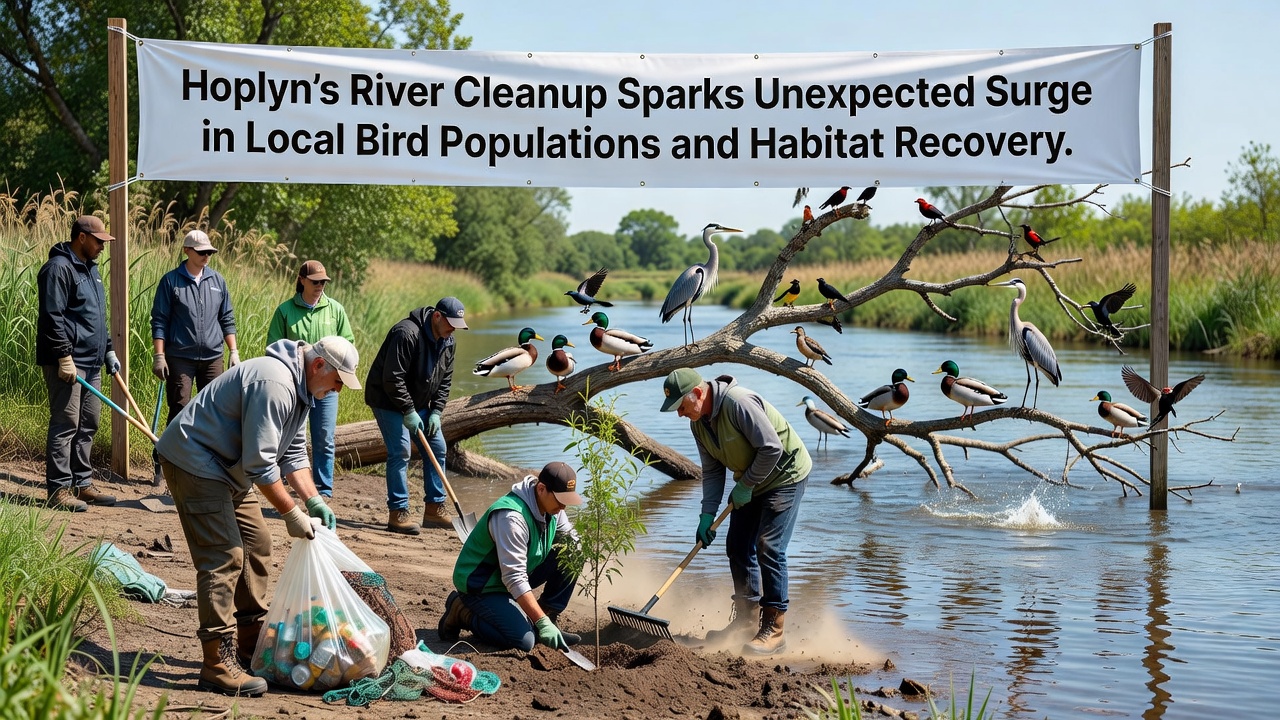
Local authorities partnered with environmental groups to clear pollutants that accumulated from historical manufacturing activities, and crews extracted over 200 tons of waste materials while stabilizing eroded shorelines with bioengineered barriers that prevent future sedimentation. These actions aligned with broader regional water quality standards set by agencies across multiple jurisdictions, and similar initiatives in Canada through Environment and Climate Change Canada have produced comparable habitat gains in other watersheds.
Teams installed artificial nesting structures at intervals along the restored corridor, and they monitored water chemistry weekly to track reductions in heavy metals and nutrient runoff that previously limited aquatic insect populations serving as food sources for insectivorous birds.
Observed Changes in Bird Populations
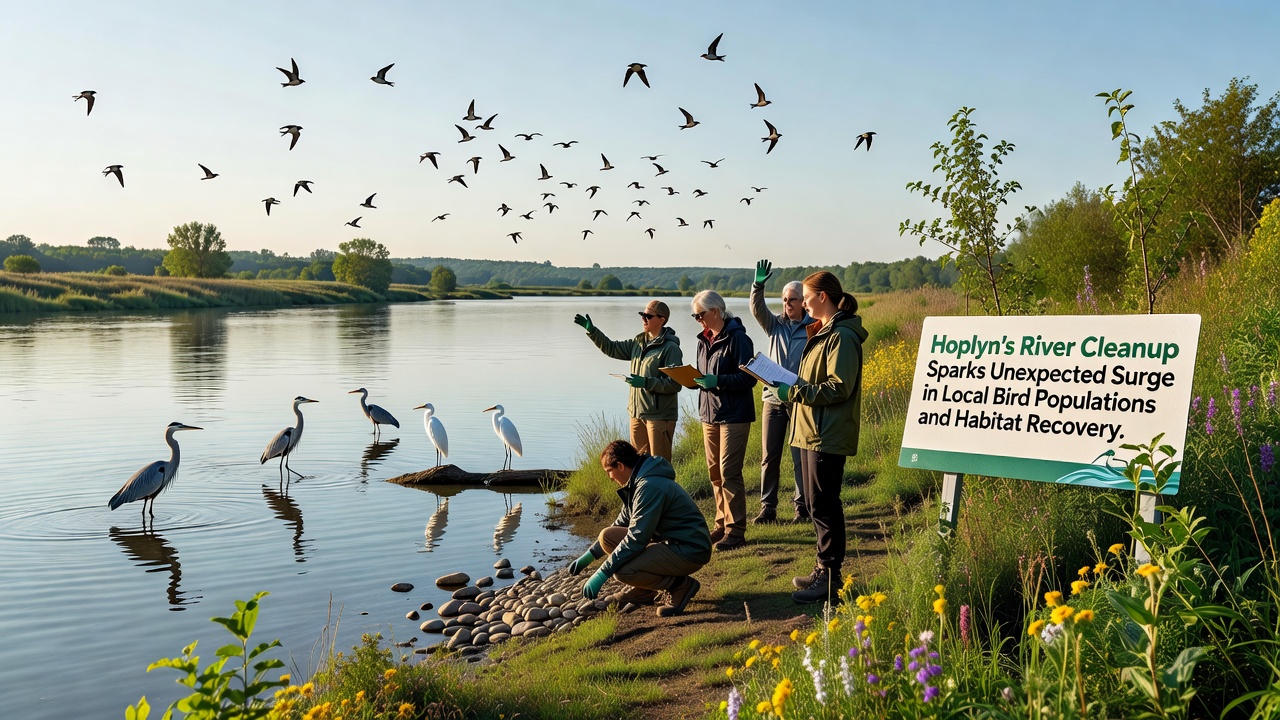
Surveys conducted throughout 2026 recorded a 45 percent rise in great blue heron sightings compared with baseline counts from 2023, while kingfisher pairs established new territories in sections previously devoid of suitable perches. Data collected by field researchers indicated that migratory warblers and other songbirds returned in higher numbers during spring passages, and these patterns matched findings from academic studies at institutions like the University of British Columbia that link riparian restoration to enhanced avian diversity.
Breeding success rates improved as well, with nest monitoring revealing higher fledgling survival in areas where vegetation density increased after replanting efforts. Observers noted that species such as the belted kingfisher and various waterfowl adapted quickly once shelter and foraging opportunities expanded, and the overall species count at fixed observation points climbed from 28 to 41 by late summer 2026.
Habitat Recovery Metrics
Vegetation surveys showed that native sedges and willows reached 80 percent ground cover within 18 months of planting, which stabilized soil and created microhabitats for invertebrates that support the base of the local food web. Water temperature readings dropped by an average of two degrees Celsius in shaded stretches, and this change benefited cold-water fish populations that in turn attracted piscivorous birds.
Independent assessments by regional wildlife services confirmed that dissolved oxygen levels rose consistently after debris removal, and these improvements correlated directly with expanded macroinvertebrate communities documented in benthic sampling. Restoration practitioners applied techniques refined in European Union-funded projects that emphasize natural flood management alongside biodiversity targets.
Monitoring Methods and Data Collection
Researchers deployed automated acoustic recorders at ten locations to capture species vocalizations throughout the day, and they supplemented these recordings with visual transects conducted twice monthly by trained volunteers. Satellite imagery analyzed by university teams tracked canopy development and confirmed that restored zones expanded at a rate of 12 hectares per year since the initial phase concluded.
Long-term datasets compiled from these efforts provide baseline information for future comparisons, and figures released through government portals allow cross-regional analysis of similar river restoration outcomes.
Conclusion
Continued monitoring through 2027 will determine whether the observed population gains stabilize or continue to rise, and ongoing maintenance of the restored corridor remains essential to sustaining the documented habitat improvements. The Hoplyn case illustrates measurable ecological responses that follow systematic removal of legacy pollutants combined with active revegetation, and comparable results appear in reports from multiple international sources focused on freshwater ecosystem recovery.